THE COST
The no-show cost, quantified.
Run the math on your own book before you trust anyone else's benchmark. A single no-show at a $300 average ticket empties a $300 slot the moment the appointment time passes — nobody rebooks it same-day. Ten empty appointments a month is $3,000 gone; a year of that pattern is real revenue nobody delivered and nobody collected.
The patient who no-shows rarely feels the cost. The patient who wanted that slot and never got a call when it opened does. Multiply your own no-show count by your own average ticket, and the number stops being abstract.
Three mechanical changes fix this — not a mindset shift. They're covered below.
| No-shows / month | Avg. ticket | Revenue lost / month | Revenue lost / year |
|---|---|---|---|
| 5 | $300 | $1,500 | $18,000 |
| 10 | $300 | $3,000 | $36,000 |
| 10 | $450 | $4,500 | $54,000 |
THE BENCHMARKS
What the published numbers say.
Published benchmarks exist, but read the sample before you adopt the number. Regulr's roundup of ProspyrMed's 2025 analysis of med spa scheduling data puts the average med spa no-show rate between 17 and 22 percent, with practices under 8 percent in the top tenth. The same page models a single-provider practice at a $350 average ticket losing about $91,000 a year to empty slots — roughly one booking in five never arriving.
Zenoti's 2026 benchmark data tells a different story: medical spas near 4 percent. Different sample, different number — a booking-software vendor's benchmark describes practices that already run reminders and deposits through software, so it reads as a ceiling for a fixed system, not a baseline for a broken one.
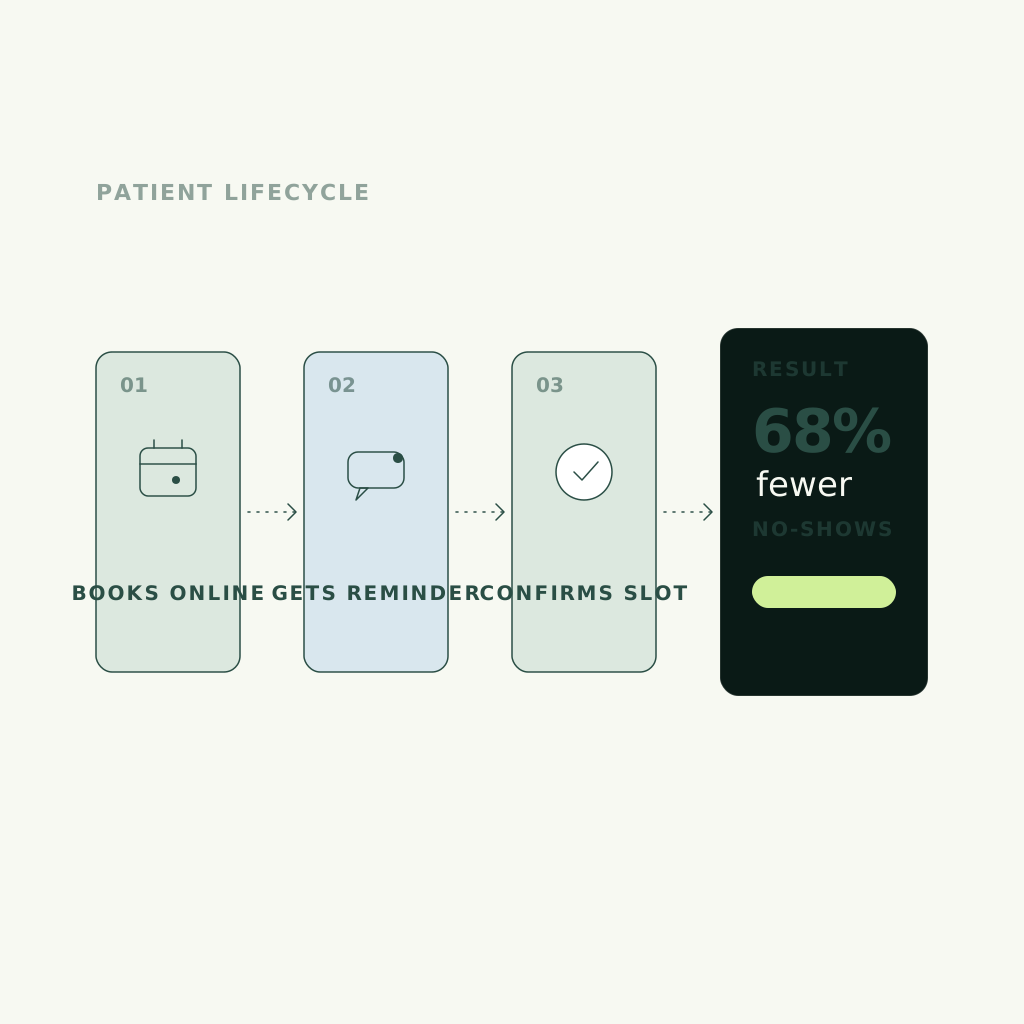
On the fix side, ProspyrMed's own guidance puts the drop from text-based reminders at 40 to 50 percent, and lists deposit collection and an automated waitlist beside them — the same three levers in the fix below. Treat every one of these figures as a range from someone else's book. The only number that decides your budget is yours: your no-show count times your average ticket.
THE GAP
Why medspas lose the no-show fight.
Most medspa booking flows run on one reminder and no backup plan. A single text 24 hours out catches whoever happens to glance at their phone; everyone else is a coin flip. No deposit means canceling costs the client nothing — so it costs your calendar everything. And when a slot does open up, nobody's watching for it: the front desk finds out at checkout, not check-in.
Your patient feels the other side of this gap too. The one who wanted an earlier appointment never gets a callback, because the system never noticed the slot opened. Three gaps, one outcome: a calendar that looks full and doesn't convert to revenue.
- One reminder only
- Zero deposit friction
- No waitlist backfill
THE FIX
The fix: deposits, reminders, and backfill.
Deposits change the math on cancellation. A card on file at booking — charged in full or in part if the client no-shows — turns "I'll just skip it" into a real decision. Pair it with a written cancellation policy stated at booking and confirmed by email, so nobody's surprised by the charge.
Reminders need to cascade, not repeat. Stage three touches on different channels: email at seven days out, SMS at 48 hours, and a same-day text or voice call for higher-ticket bookings. Different people respond to different channels — cascading catches more of them than one lonely text.
Waitlist backfill closes the loop. The moment a slot cancels, an automation should text your waitlist before the front desk even notices the gap. That's the difference between an empty chair and same-day revenue recovered — and it's the fastest win on this list for the patient who's been waiting for an earlier opening.
- Collect deposits upfront
- Cascade three reminders
- Auto-fill the waitlist
THE STACK
The tooling map for each job.
None of this needs new software bolted onto old software — it needs one stack doing three connected jobs. Deposit collection lives in your booking widget, wired to a payment processor that can charge a card on file. The reminder cascade is a workflow automation triggered off the appointment date, firing to three channels on a schedule. Waitlist backfill is a calendar webhook: when a slot cancels, it fires a waitlist automation before a human has to remember to.
Want to see how your current setup maps against this list? Run your site through our free scorecard. Free, no commitment. Takes 2 minutes.
- Deposit at booking
- Three-channel reminders
- Auto waitlist text
- Policy at confirmation
| Job | What it needs | Where it lives in the stack |
|---|---|---|
| Deposit collection | Card-on-file at booking | Booking widget + payment processor |
| Reminder cascade | Email, SMS, and voice staged over 7 days | Automation workflow triggered off appointment date |
| Waitlist backfill | Auto-text when a slot opens | Calendar webhook → waitlist automation |
| Cancellation policy | Policy text at booking + confirmation email | Booking form + confirmation template |
FAQ
Common questions.
What's a healthy no-show rate for a medspa?
Published ranges disagree because the samples differ: ProspyrMed's 2025 scheduling data, summarized by Regulr, averages 17 to 22 percent with the top tenth under 8 percent, while Zenoti's 2026 benchmark puts medical spas near 4 percent. If no-shows are eating a noticeable slice of your week — several a month, not one or two — the fixes above usually pay for themselves fast.
How much should a medspa deposit be?
Enough to make canceling cost something — many owners set it as a flat fee or a share of the treatment price, collected as a card on file at booking. There's no universal rule; the goal is friction, not profit.
Should I charge a no-show or cancellation fee?
Yes, and say so in writing at booking. A clear cancellation policy — with a grace window, like 24 or 48 hours — holds up better with clients than a surprise charge after the fact.
How far in advance should reminders go out?
Stage three touches: one around seven days out, one at 48 hours, one same-day morning. Email, SMS, and a voice call for higher-ticket bookings each catch different people.
What do I do when a client cancels last-minute?
Push the open slot to your waitlist automation immediately. A same-day cancellation filled within the hour is close to full revenue recovered instead of lost.
GO FURTHER
Go deeper on medspa ops.
See the full booking build we shipped for Cyra Beauty — deposits, reminders, and waitlist logic, live. If you're scoping the rebuild first, start with what a medspa website actually costs, or browse how we approach the medspa vertical end-to-end.