SaaS websites that close the enterprise buyer and carry the round.
Side Studios designs and builds websites for B2B SaaS founders — post-raise, when the site suddenly has three jobs: convince a technical evaluator your product is real, help recruiting close senior hires, and make the next round's investor believe the story. We build for the skeptical buyer running a trial in one tab and reading your homepage in another, wire the demo request for speed-to-lead, and hand you a CMS your marketing team can iterate on without a ticket to engineering.
Free, no commitment. Takes 2 minutes.
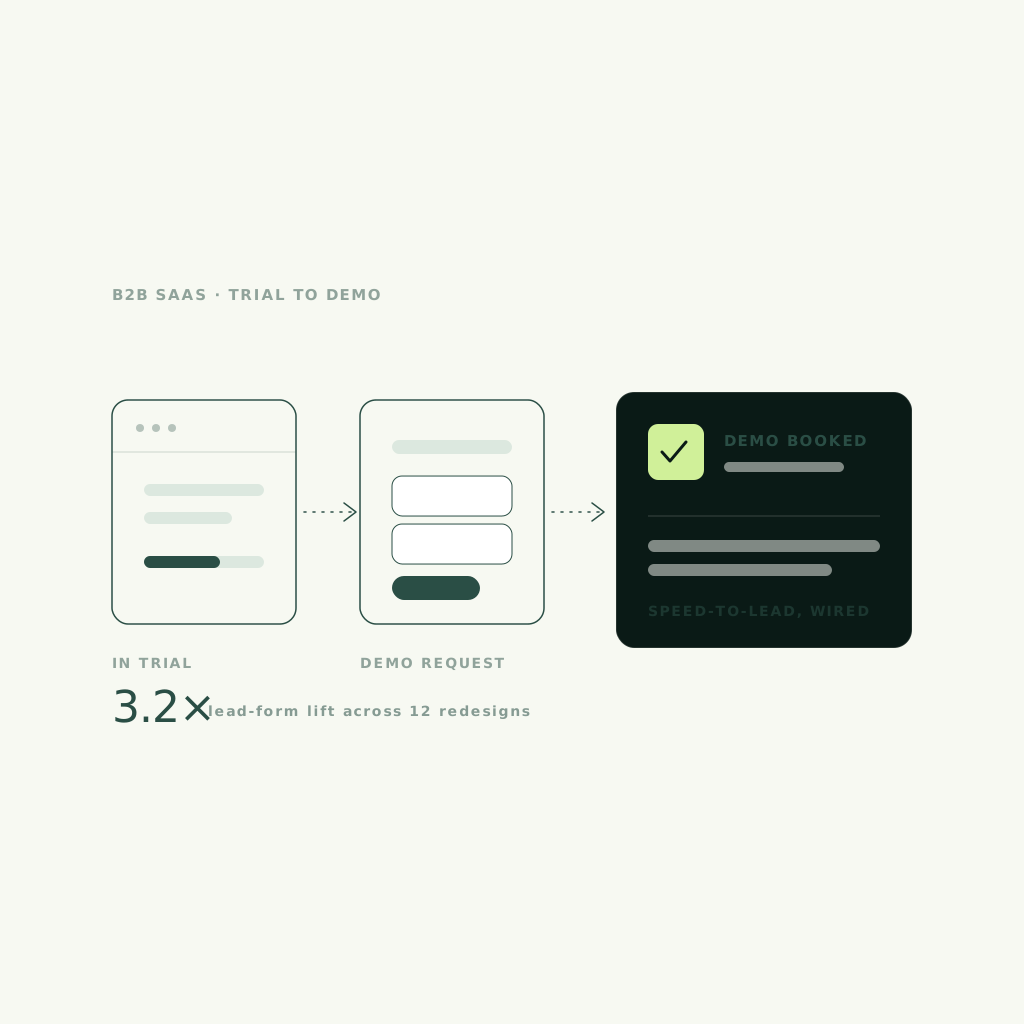
THE PROBLEM
Funded product. Template-detectable site.
You raised on the strength of the product, and now the website is the weakest link in the story. A technical buyer lands on it mid-evaluation and reads a wall of generated-looking gradients and vague "platform" copy that could belong to any of forty competitors — so they can't tell what you actually do or whether you'll exist in two years. Meanwhile the marketing team wants to ship a new page for a launch and can't, because every change routes through an engineer who has a sprint to protect. A post-raise site that looks like a template quietly undercuts the exact narrative the raise was supposed to prove.
We treat the site as the surface that has to close a long, technical, multi-stakeholder sale — the same job we do for industrial B2B buyers who evaluate for weeks before they ever fill a form. Distinctive, credible design that reads built, not generated, so a skeptical evaluator trusts the product behind it. Copy that says what the software does in the buyer's language instead of category fog. A demo request treated as the primary conversion and wired for speed-to-lead, because in B2B the vendor who replies first is usually the one still in the deal at close. And a CMS your team owns, so the site keeps up with a roadmap that ships weekly, not quarterly.
WHAT WE BUILD
Built to close the deal.
Every section earns a conversion job. Here is what goes into a B2B SaaS build.
Evaluator-first hero
What the product does, who it's for, and the proof a technical buyer needs — above the fold, in plain language, so an evaluator mid-trial can qualify you in one screen instead of guessing from a gradient.
Demo request wired for speed-to-lead
The demo or design-partner request is treated as the primary conversion, structured to capture the qualifying detail your team needs, and routed straight into your CRM or Slack so the first reply goes out before a competitor's does.
A CMS your team can run
Marketing ships launch pages, changelog entries, and campaign landers without a ticket to engineering — so the site keeps pace with a roadmap that moves weekly, and iteration speed stops being an eng dependency.
Distinctive by design
A brand system built to read credible, not AI-generated — because in a market where every competitor used the same builder, looking template-detectable is the fastest way to lose a post-raise buyer's trust.
Multi-stakeholder architecture
The economic buyer, the technical evaluator, and the senior hire reading your careers page are all served in one site — so the credibility that closes a deal and the story that recruits arrive together, without watering down either.
PROOF
Proof that transfers.
Straight answer: Side hasn't published a SaaS client case study yet — so here's the honest version. The work that transfers to B2B SaaS is our complex-offer, long-sales-cycle proof. Four industrial B2B builds — Vantix, PSC, Actotive — sell to technical buyers on long evaluation cycles, where an RFQ is functionally the same conversion as a demo request: a considered, multi-stakeholder ask, not an impulse. PSC foregrounds 655+ projects so a high-stakes buyer qualifies the proof before the pitch, exactly what a skeptical evaluator needs. Vantix turns a genuinely complex machine into a clear, multi-step path to a request — the same clarity a technical product page has to earn. And the honest kicker: our sister product theside.io is itself a SaaS, and we built its site. We run our own SaaS on the same wiring we'd give you — the strongest proof we've got that this stack works on a software company, not just a claim about one.
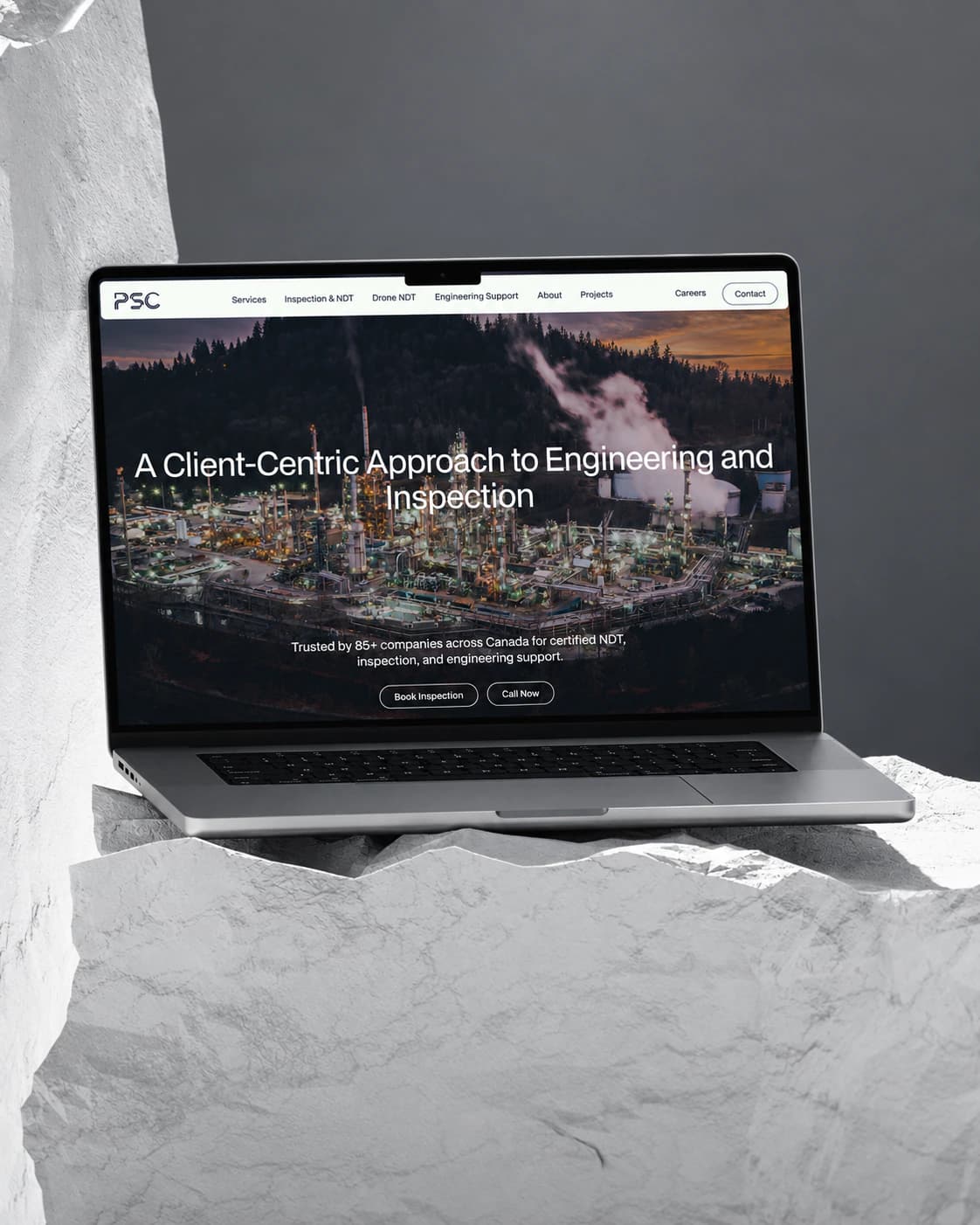
PSC - Inspection & Engineering
Inspection that ships when it matters.
655+ projects delivered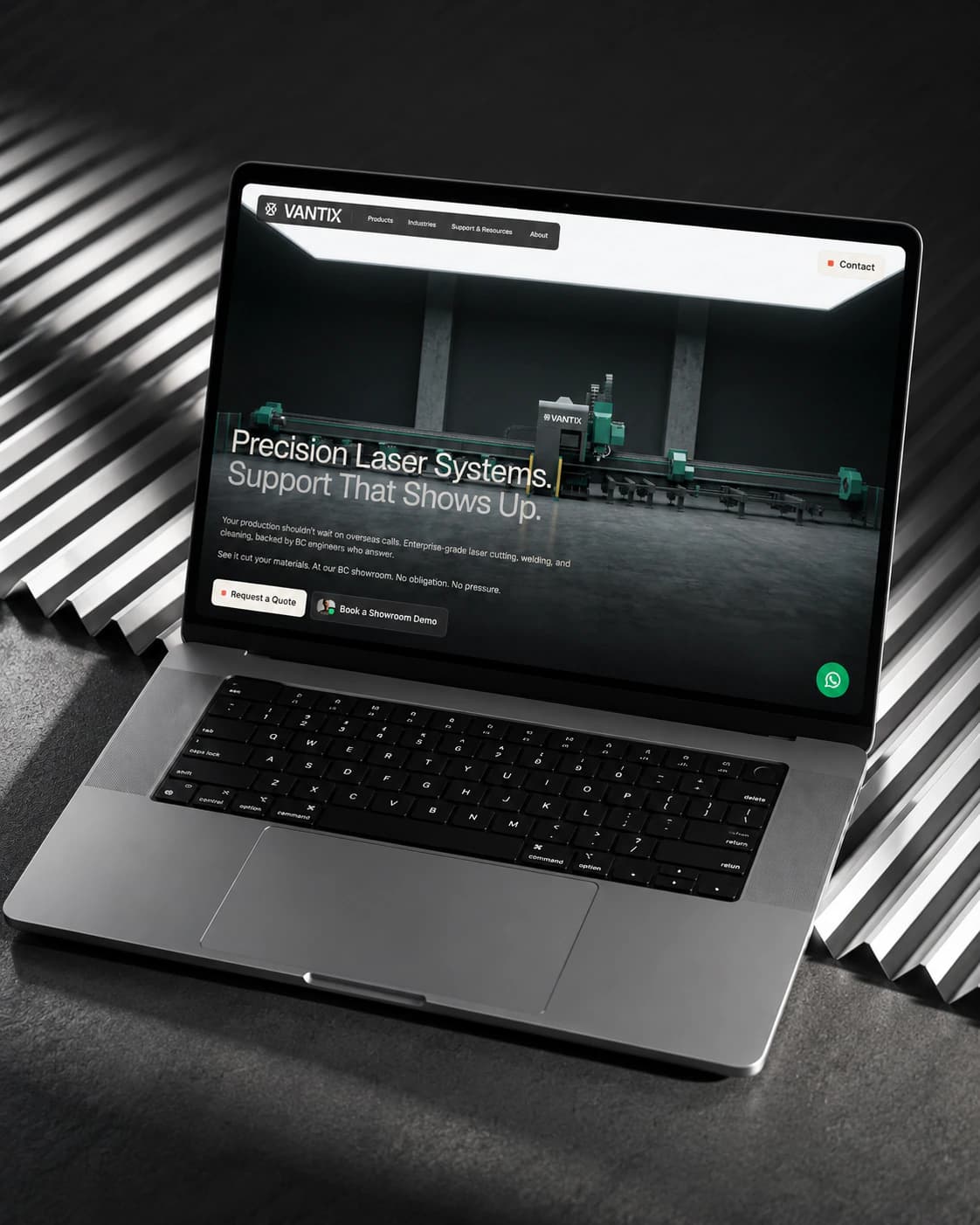
Vantix Industrial Lasers
Heavy-duty laser systems built to ship.
Demo bookings up. Quote cycles cut.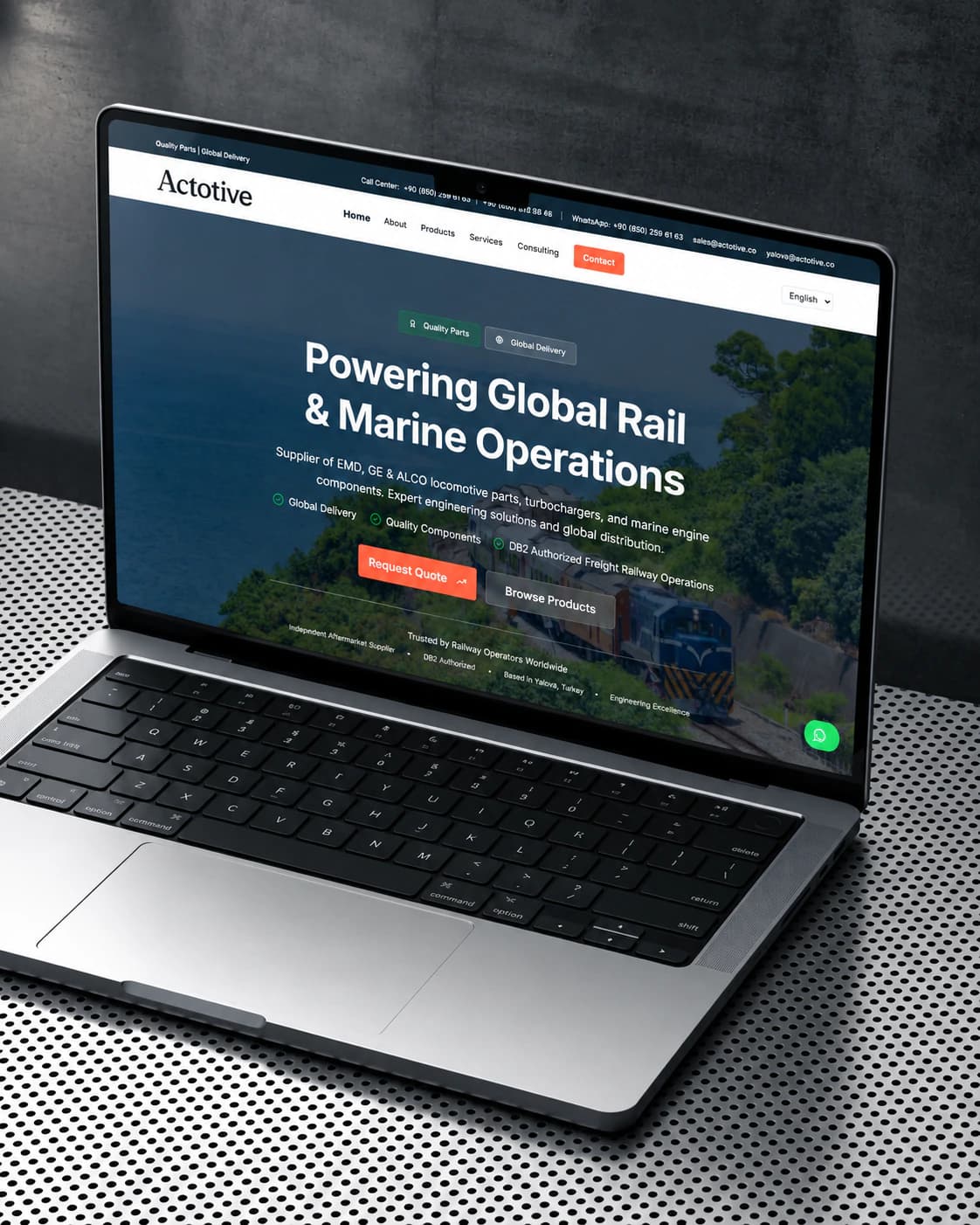
Actotive - Rail & Marine Parts
Global rail and marine parts, sourced clean.
3 OEM lines, EN/TRPricing
Full Studio from $24k.
Studio Sprint from $8k · Full Studio from $24k · Studio + Engine from $42k. Public floors, not bait — final scope depends on depth, content, and integrations.
FAQ
Common questions.
How much does a B2B SaaS website cost?
Our public floors are a Studio Sprint from $8k for a focused build or high-priority rebuild, and the Full Studio from $24k for a complete website and brand system. Final scope depends on how many product and solution pages you need, whether the demo flow wires into your CRM and product analytics, and how much of the story your team wants to own in the CMS afterward. The current floors are on our pricing page.
We just raised — why redesign the site now?
Because a funding round changes what the site has to do. Overnight it's carrying an enterprise sales conversation, a recruiting pitch to senior hires, and the story your next round will be measured against — and a template-detectable site undercuts all three. A post-raise redesign is the most common startup redesign trigger for exactly that reason. We break down the timing and scope in our website redesign after funding guide.
You don't have a SaaS case study — why you?
Straight answer: we haven't published a SaaS client study yet. What we have is directly transferable — four industrial B2B builds that sell complex products to technical buyers on long evaluation cycles, where an RFQ is functionally the same considered conversion as a demo request. And our own sister SaaS, theside.io, runs on a site we built — so this isn't a stack we're theorizing about, it's one we run our own software company on.
Can our marketing team update the site without engineering?
Yes — that's a core part of the build. We hand off a CMS your marketers use to ship launch pages, changelog entries, and campaign landers on their own, so the site keeps pace with a roadmap that ships weekly instead of waiting on an engineer's sprint. Iteration speed stops being an engineering dependency.
Can you wire the demo request into our CRM and stack?
Yes. The demo or design-partner request is treated as the primary conversion — structured to capture the qualifying detail your team needs — and routed straight into your CRM, Slack, or inbox so the first reply goes out fast. In B2B, the vendor who responds first is usually the one still in the deal at close, so speed-to-lead is built in, not bolted on.
Could we just build this on an AI website builder?
For a pre-launch placeholder, maybe. But a site that reads distinctive to a skeptical technical buyer, a demo flow wired for speed-to-lead, product pages that say what the software actually does, and a CMS your team can run are exactly where AI builders stop — and post-raise, a template-detectable site is a story-killer. We lay out the honest trade-off at ai website builder vs web design agency.
How long does a B2B SaaS website take to launch?
A focused Studio Sprint targets a 14-day ship. A full build with several solution pages, deeper CRM and analytics wiring, and a marketer-owned CMS runs longer, depending on content volume and how many stakeholders review.
See where your SaaS site stands.
Get your Brand Score in under two minutes — a private audit of brand, credibility, and demo-request wiring, with the three highest-impact moves we'd make on your site first.
Free, no commitment. Takes 2 minutes.