The true cost of a DIY website is your time.
The subscription is the cheap part. The real bill for a do-it-yourself site is the founder hours it eats and the revenue it quietly leaves on the table. Here's the honest time-math — and the point where DIY is genuinely still the right call.
No sales call until you ask for one.
THE VERDICT
The honest answer.
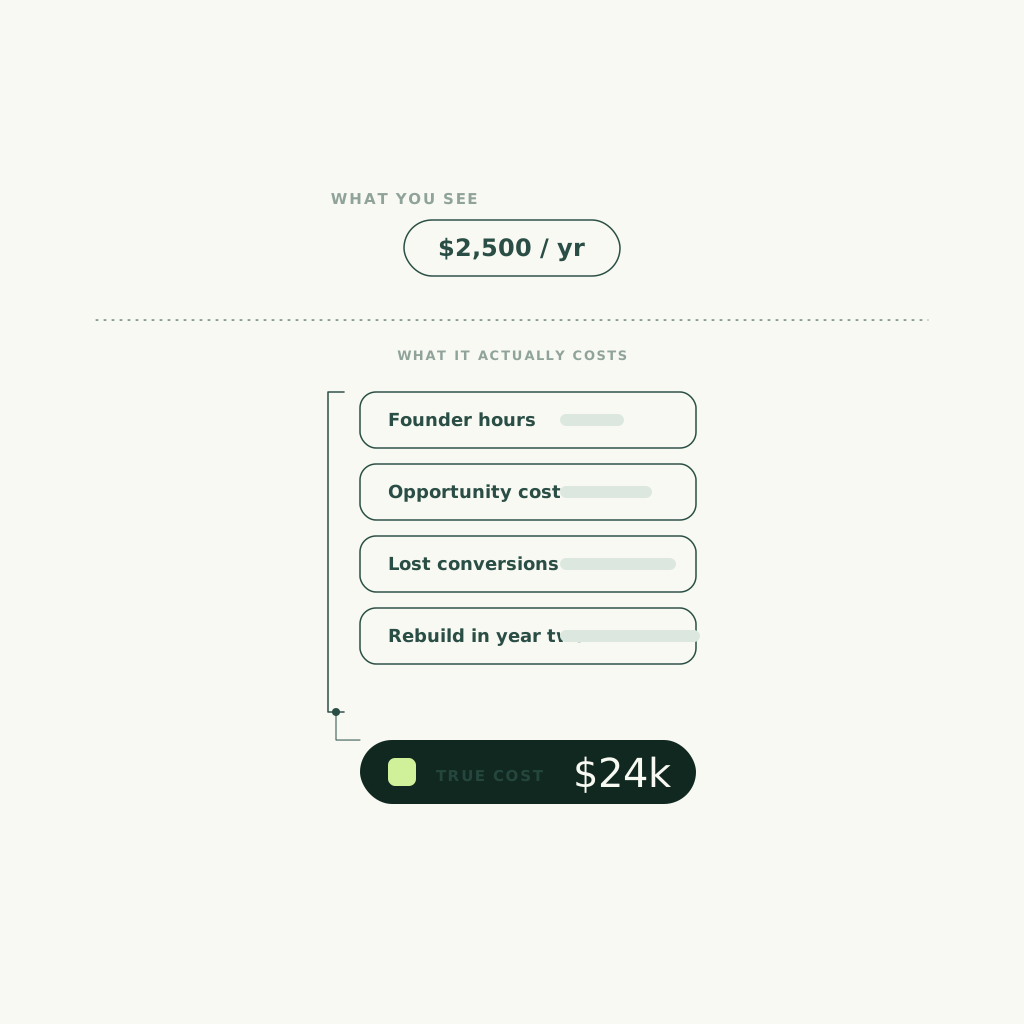
A DIY builder's sticker price is small and the hidden cost is large, so the real comparison isn't $30/mo versus a project fee — it's total cost of ownership. Founders routinely report spending 15–25 hours a month wrestling a builder, and those are the most expensive hours in the company: put your own hourly value on them and the "cheap" site often outspends a studio build inside a year, before a single lead is counted. Then there's the quiet cost — a site that underconverts leaves revenue on the table every day it's live, and conversion is the discipline a studio is actually selling. None of that means DIY is wrong. If you're pre-revenue and validating, a builder is the right, disciplined choice — spend the money on finding customers, not on us. The math flips the moment your time gets expensive and real revenue starts riding on the site.
Pre-revenue and validating? Build it yourself — genuinely. Once your hours are expensive and revenue rides on the site, the DIY sticker price is the smallest number on the page.
SIDE BY SIDE
The real cost, counted.
| Where it counts | Doing it yourself | Hiring a studio |
|---|---|---|
| Sticker price | Low and visible — a builder subscription, roughly $15–$50/mo. The number everyone compares on. | Higher and visible — project floors from $8k for a sprint, from $24k for a full build. Priced to the outcome. |
| Founder hours | The hidden bill. Founders routinely report 15–25 hours a month building and maintaining it — the most expensive hours in the company. | A few hours of input and review. The build is someone else's job, so your time goes back to the business. |
| Time-to-competent | Weeks of learning the tool before the site is even good — a cost you pay in calendar time and context-switching. | Zero. The competence is already bought; a focused build targets a 14-day ship. |
| Conversion engineering | On you to figure out. Most DIY sites look fine and convert poorly, because converting is a discipline, not a template. | The core of the job. The site is built to book, not just to exist. |
| Integrations & capture | Your evenings and weekends — forms, CRM, calendar, analytics, each a separate rabbit hole to wire and maintain. | Wired on day one. Forms route into a CRM, calendar, or AI voice line as part of the build, not a phase two. |
| Total 2-year cost | Sticker price + (15–25 hrs/mo × your hourly value) + the revenue an underconverting site leaves on the table. Often more than a studio build. | A defined project fee, optionally plus continuity from $2,500/mo — with the founder hours and lost conversion added back to the business. |
| When it's right | Pre-revenue, validating, testing the idea — spend on finding customers, not on a studio. DIY is the disciplined call here. | When your time is expensive and real revenue rides on the site converting — the point where the hidden costs dwarf the fee. |
THE ROUTER
Run your own numbers.
No DIY-bashing — a builder is the right tool for a real stage, and we'll say so plainly. Plug your own hourly value into the math below; it decides the answer more than any sticker price does.
Build it yourself when
- You're pre-revenue and validating — the goal is learning, not converting.
- The site is a placeholder while you find your first customers.
- Your own time genuinely isn't the constraint yet, and cash is.
- You need something live this week and it only has to exist, not perform.
- You'd rather spend the budget on reaching customers than on a studio — for now.
Hire a studio when
- Your hours are expensive and 15–25 of them a month is a real cost, not a rounding error.
- Revenue depends on the site converting — bookings, demos, RFQs, sold units.
- The DIY site looks fine but quietly underconverts, leaving money on the table daily.
- You need integrations and capture wiring you don't want to maintain yourself.
- You've done the time-math and the sticker price is the smallest number in it.
FAQ
Common questions.
What's the true cost of a DIY website?
Not the subscription. The true cost is the founder hours it eats — commonly reported at 15–25 a month — priced at your own hourly value, plus the revenue an underconverting site leaves on the table while it's live. Add those up and the "cheap" DIY site often costs more than a studio build inside a year. The sticker price is usually the smallest number in the real total.
Isn't a website builder way cheaper than an agency?
On sticker price, yes — and that's the whole trap. A builder is $15–$50/mo; a studio build starts at $8k. But once you add the founder hours and the revenue lost to weak conversion, the totals often converge or flip. Cheaper up front isn't the same as cheaper overall. The honest comparison is total cost of ownership, not the monthly fee.
How many hours does a DIY website really take?
Founders routinely report 15–25 hours a month building and maintaining a DIY site — learning the tool, wrestling layouts, wiring forms, and keeping it current. We won't pretend that's a precise universal figure; your number depends on the site. But whatever it is, multiply it by your own hourly value, because those founder hours are the most expensive in the company.
When is building it myself actually the right call?
When you're pre-revenue and validating. If the site's job is to exist while you find your first customers, a builder is the disciplined choice — spend the money on reaching people, not on us. We'll tell you that directly rather than sell you a build you don't need yet. The math flips once your time is expensive and real revenue rides on the site.
How do I calculate the real cost for my situation?
Take the monthly sticker price, add your hours per month times your own hourly value, then add the revenue a weak-converting site loses. Compare that two-year total to a one-time studio fee. Plug in your own numbers; the honest answer is usually clear once the hours are counted.
My DIY or AI-built site looks fine but isn't converting — now what?
That's the most common version of this problem: the site exists and looks okay, but it doesn't book customers. That's a conversion and capture problem, not a design-taste one, and it's exactly what a rebuild fixes. We walk through the honest options in our guide to fixing an AI-generated website, and our Studio Sprint rebuilds from $8k.
See what your current site is really costing.
The Brand Score audits your site in two minutes — brand, conversion, and capture wiring — and shows the three highest-impact fixes, so you can weigh them against the hours you're spending now.
Free, no commitment. Takes 2 minutes.