THE SHORT ANSWER
The number, before the caveats
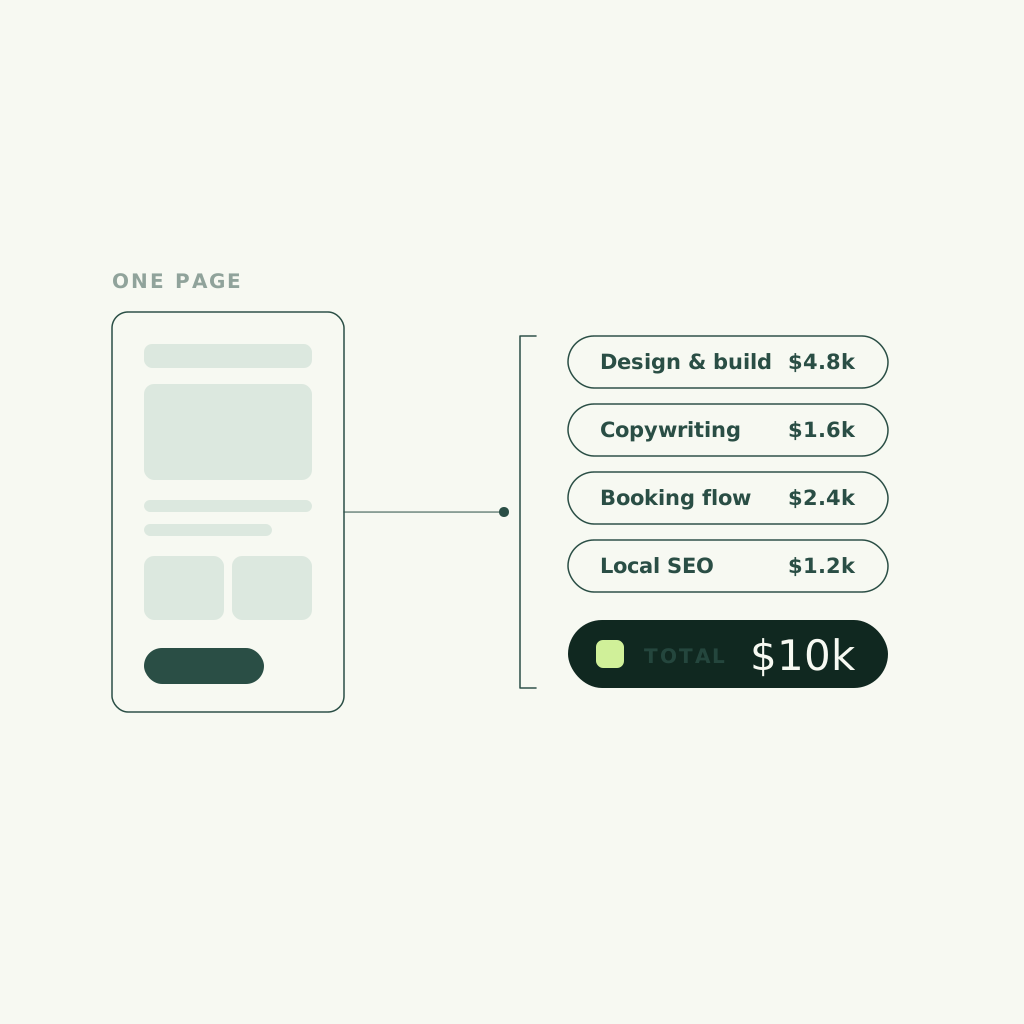
A medspa website commonly runs one of three ways. A template build — a themed WordPress or Squarespace site with a booking plugin — is typically quoted around $3k, and it looks like every other clinic on the page. A specialist freelancer or small studio usually lands in the $8k–$15k range for a custom site with real booking integration. A full brand-and-site system — identity, photography direction, treatment content, and conversion wiring — commonly starts around $25k and climbs with scope.
For reference, our own public floors sit in that specialist-to-system band: a Studio Sprint from $8k for a focused build or rebuild, and the Full Studio from $24k for a complete website and brand system. You can see the full breakdown on our pricing page. Those are floors, not final quotes — the real number depends on the drivers below, not on how many pages you have.
WHAT MOVES THE PRICE
What actually drives the cost
Two medspa sites with the same page count can differ by a factor of five. The gap is almost never the pages — it's these five things.
Booking integration
The single biggest swing. Wiring a real scheduler — Jane App, Boulevard, or your existing system — one tap from every service page, so a patient books without phone-tag, is engineering, not a link. Cyra Beauty's build runs on Jane App exactly this way. A template that just embeds a generic form is cheaper because it does less.
Compliance
Healthcare sites carry weight a brochure site doesn't: WCAG 2.1 AA accessibility, consent-aware before-and-after galleries, and privacy-respecting form handling. Built in from the first component, it's routine. Retrofitted before an audit, it's expensive. Either way it belongs in the quote.
Content
Treatment pages, FAQs, and result galleries in a repeatable voice are what actually rank and convert. If the studio writes them, the price reflects real work. If 'content by client' is buried in the contract, the cost didn't disappear — it moved onto your desk.
Photography
Aesthetics is a visual category, and stock faces read as exactly that. Real clinic photography or art-directed imagery costs more up front and is often the difference between a site that feels premium and one that feels like a template with your logo on it.
Capture wiring
The part most quotes omit. Forms, chat, and booking routing straight into your CRM and calendar on day one — no manual re-entry, no lead sitting unanswered while a patient books elsewhere. It's the difference between a site that looks done and one that actually feeds the practice.
WHAT YOU GET
What each tier actually buys
Price bands map to outcomes, not just deliverables. Here's the honest version of what each one gets you.
- Template: fast, generic, DIY content
- Specialist: custom, real booking
- Full system: brand, content, capture
- Higher tiers: wired to convert
WATCH FOR
The red flags in a cheap quote
A low number usually hides where the work went, not that the work isn't needed. Watch for a quote with no line for booking integration — it means the scheduler is a bolt-on you'll fight later. Watch for 'content provided by client,' which moves the hardest, slowest part of the project onto you. Watch for silence on accessibility, because WCAG 2.1 AA isn't optional for clinics tied to Medicare and Medicaid funding, and retrofitting it costs more than building it in. Watch for stock photography standing in for a real clinic. And watch for a launch plan with no capture wiring — a beautiful site that dumps leads into an inbox nobody checks is a cost, not an asset.
- No booking line item
- Content offloaded to you
- Accessibility unmentioned
- Stock faces as brand
- Leads dumped in an inbox
THE OPERATOR MATH
Run the number in bookings, not dollars spent
Judge the price against what it returns, the way you'd judge any operator spend. The math is simple: a medspa website pays for itself in booked consults, so the question isn't 'what does it cost,' it's 'how many extra consults does it need to book to pay for itself.'
Use your own numbers. Take what a consult is worth to you — say, for illustration, that a new patient's first visit and likely follow-ups net you a few hundred dollars. Sites rebuilt this way turn more of the traffic you already have into booked consults instead of bounces, because booking is one tap from every screen. Multiply your consult value by the additional consults you would need each month, and most clinic-website investments clear their own cost in a single-digit number of months — then keep compounding. Speed helps too: a focused sprint means the booking curve starts bending weeks sooner than a three-month build. Plug in your real figures before you sign anything; if the booking lift can't cover the price in a reasonable window, it's the wrong build. To see how these decisions play out on a real clinic build, the Cyra Beauty case study breaks down a Coquitlam medspa rebuilt around one-click booking. And if you want to see what AI answers already say about clinics near you, our index of the Vancouver medspas ChatGPT names shows which clinics come up and how often.
FAQ
Common questions.
How much does a medspa website cost?
A template build is commonly quoted around $3k, a specialist custom site typically lands in the $8k–$15k range, and a full brand-and-site system usually starts around $25k. Our own public floors sit in that band: a Studio Sprint from $8k and the Full Studio from $24k. The final number depends on booking integration, compliance, content, and capture wiring more than on page count.
Why is a medspa website more expensive than a regular small-business site?
Three reasons a brochure site doesn't carry: real booking integration wired one tap from every service, healthcare compliance like WCAG 2.1 AA accessibility and consent-aware galleries, and capture wiring that routes bookings straight into your CRM and calendar. The value in a clinic site lives between the systems, which is where the cost goes too.
Can you connect the site to Jane App or Boulevard?
Yes. Booking is treated as the primary conversion, so we wire Jane App, Boulevard, or your existing scheduler directly into the site and keep it one tap from every service page. Cyra Beauty's build runs on Jane App exactly this way.
Is a $3k template medspa website ever enough?
For a brand-new clinic testing the market on a tight budget, a template can get you online. But it looks like every other clinic, the booking is usually a bolt-on, and content and capture land on your desk. Most clinics that rely on the site to book consults outgrow it fast and pay twice — once for the template, once for the rebuild.
How do I know a medspa website is worth the price?
Run it in bookings, not dollars. Take your own consult value and see how many months of extra consults it takes to cover the cost. If the math doesn't clear in a reasonable window, it's the wrong build. Use your real numbers, not ours.
How long does a medspa website take to launch?
A focused Studio Sprint targets a 14-day ship. A full brand-and-site build runs longer depending on how many treatments, galleries, and integrations the clinic needs.