THE SHORT ANSWER
The number, before the caveats
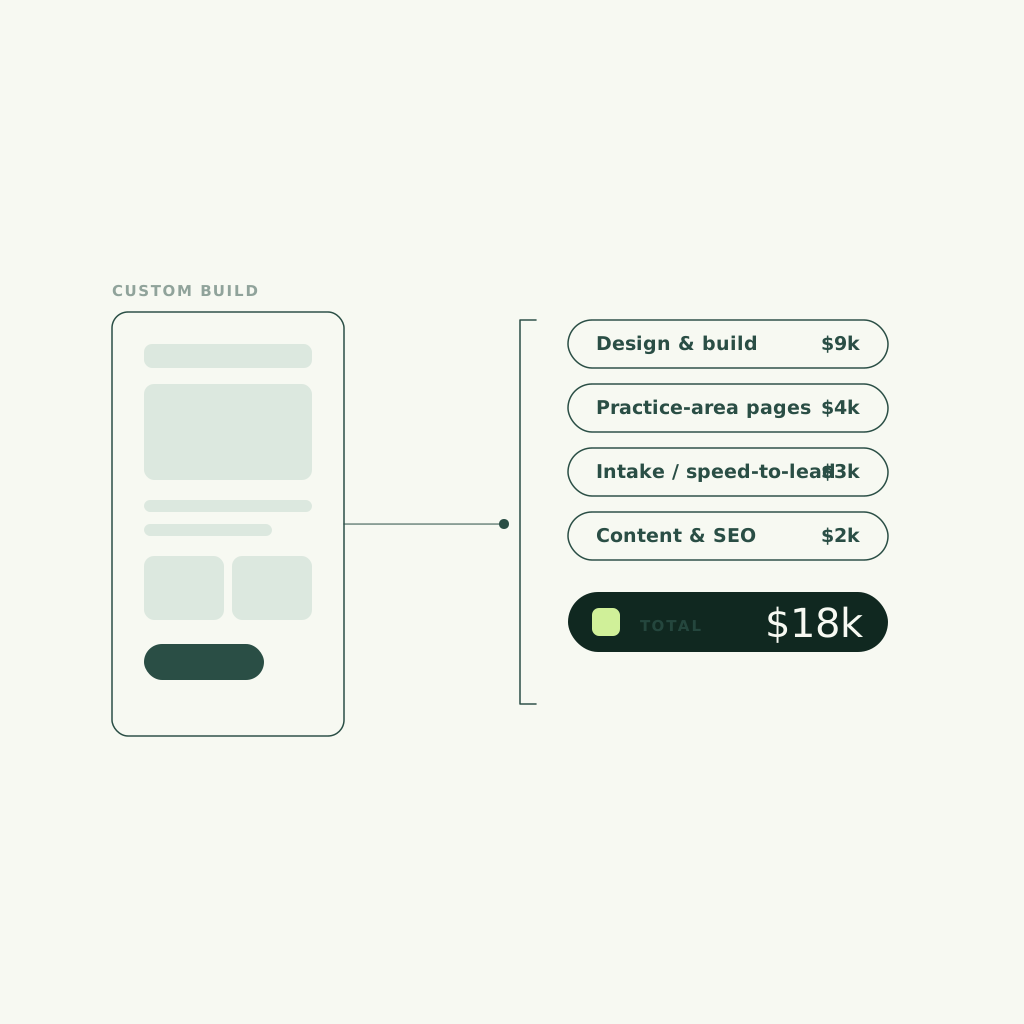
Published agency tiers commonly show four bands for a law firm website. A template build — a themed WordPress site with a contact form — typically runs $3k–$5k, and it looks like every other firm on the results page. A hybrid custom-on-a-framework site usually lands around $10k–$15k. A fully custom design-and-build commonly falls in the $18k–$25k range. And an enterprise, multi-office or multi-practice system with heavier content and integrations commonly starts around $40k and climbs from there.
For reference, our own public floors sit in the custom band: a Studio Sprint from $8k for a focused build or rebuild, and the Full Studio from $24k for a complete website and brand system. You can see the full breakdown on our pricing page. Those are floors, not final quotes — and as the drivers below show, the real number tracks practice-area depth, intake, and compliance far more than it tracks page count.
WHAT MOVES THE PRICE
What actually drives the cost
Two firm sites with the same page count can differ by a factor of five. For law firms, the gap is almost never the pages — it's these five things.
Practice-area pages
A firm running personal injury, family, criminal, and corporate needs a distinct, search-optimized page per area — each written to the specific matter a client searches for. That's real writing and real UX per practice, and it's the single biggest scope swing between a small firm site and a multi-practice one.
Intake flows
Speed-to-lead is the whole game in a trust sale, so the consult-request path — structured to capture case detail and wired into your intake software or CRM — is engineering, not a mailto link. A template that drops a generic form into an inbox is cheaper because it does less, and loses leads to the firm that answers first.
Compliance review cycles
Law firm marketing lives inside bar advertising and solicitation rules — disclaimers, how results and testimonials can be described, jurisdiction specifics. Building with those rules in mind and cycling copy through your review takes time, and that review loop is a real line item a serious quote accounts for.
Content volume
Attorney bios, practice-area copy, FAQs, and any thought-leadership all have to be written in a credible, consistent voice. If the studio writes them, the price reflects real work. If 'content by client' is buried in the contract, the cost didn't disappear — it moved onto a partner's already-billable desk.
Credibility design & brand
The site is your most-scrutinized credibility asset, so trust-first design, real photography instead of stock gavels, and a brand that reads authoritative cost more up front — and are often the difference between a site a six-figure client trusts and a template with your logo on it.
WHAT YOU GET
What each tier actually buys
Price bands map to outcomes, not just deliverables. Here's the honest version of what each one gets a firm.
- Template: fast, generic, DIY content
- Hybrid: custom-ish, light intake
- Custom: brand, practice pages, real intake
- Enterprise: multi-office, wired to convert
WATCH FOR
The red flags in a cheap quote
A low number usually hides where the work went, not that the work isn't needed. Watch for a quote with no line for intake wiring — it means the consult form is a bolt-on that dumps leads into an inbox nobody watches, and in a trust sale the firm that replies first wins. Watch for 'content provided by client,' which moves attorney bios and practice-area copy — the slowest part of the project — onto a partner's desk. Watch for silence on bar-advertising compliance, because a site that ignores disclaimer and result-claim rules is a liability, not a bargain. Watch for a single generic 'practice areas' page standing in for real per-area pages, because that's what fails to rank and fails to convert. And watch for stock gavels and courthouse steps doing the work real credibility design should.
- No intake wiring line item
- Content offloaded to partners
- Compliance unmentioned
- One flat practice-areas page
- Stock gavels as brand
THE OPERATOR MATH
Run the number in clients, not dollars spent
Judge the price against what it returns, the way you'd judge any operator spend. For a firm the math is unusually forgiving, because a single client can be worth six figures — so the question isn't 'what does it cost,' it's 'how many extra signed clients does it need to produce to pay for itself.'
Use your own numbers. Take what one matter is genuinely worth to your firm — plug in your real average case value, whether that's a few thousand dollars or well into six figures. Sites rebuilt this way turn more of the traffic you already have into consult requests instead of bounces, because the intake path is one tap from every screen. When a client is worth six figures, even a handful of additional signed matters a year clears a $24k build many times over — and unlike ad spend, the site keeps returning after it's paid for itself. Speed helps too: a focused sprint means the intake curve starts bending weeks sooner than a three-month build. Run your real average case value against the extra consults you would need before you sign anything; if the math can't clear the price in a reasonable window, it's the wrong build. For the full positioning, see our law firm website design page at law firms.
FAQ
Common questions.
How much does a law firm website cost?
Published agency tiers commonly show a template build at $3k–$5k, a hybrid custom site around $10k–$15k, a fully custom design-and-build at $18k–$25k, and an enterprise multi-office system starting around $40k. Our own public floors sit in the custom band: a Studio Sprint from $8k and the Full Studio from $24k. The final number depends on practice-area depth, intake wiring, compliance review, and content volume far more than on page count.
Why is a law firm website more expensive than a regular small-business site?
Three things a brochure site doesn't carry: a distinct, search-optimized page per practice area; intake wired for speed-to-lead so a consult request reaches you before a competing firm replies; and copy built inside your bar's advertising and solicitation rules with real review cycles. The site is also your most-scrutinized credibility asset in a trust sale, so the design has to earn a six-figure decision — which is where the cost goes.
How many practice-area pages do we need, and does that change the price?
Yes — practice-area depth is the biggest scope swing. Each area a client searches for should get its own page written to that specific matter, rather than sharing one flat list. A single-focus firm needs far less than a multi-practice firm, and the number of those pages moves the quote more than almost anything else.
Will the cost include bar-advertising compliance?
It should, and in our builds it does: we design within your jurisdiction's advertising and solicitation rules — disclaimers, testimonial handling, and how results can be described — and cycle copy through your review. We're not your compliance counsel and your firm signs off, but a serious quote accounts for that review loop rather than pretending it's free.
How do I know a law firm website is worth the price?
Run it in signed clients, not dollars. Take your own average case value — which for many firms reaches six figures — and see how few extra signed matters it takes to cover the cost of a rebuild. Because case value is so high, the math usually clears fast. Use your real numbers, not ours, and if it can't clear in a reasonable window, it's the wrong build.
How long does a law firm website take to launch?
A focused Studio Sprint targets a 14-day ship. A full multi-practice build with heavier intake wiring and compliance review runs longer, depending on how many practice areas and review cycles are involved.
Is a cheap template law firm website ever enough?
For a brand-new solo practitioner testing the market, a template can get you online. But it looks like every other firm, the intake is usually a bolt-on that loses leads, the practice pages don't rank, and the content lands on your desk. Most firms that rely on the site to book consultations outgrow it fast and pay twice — once for the template, once for the rebuild.